
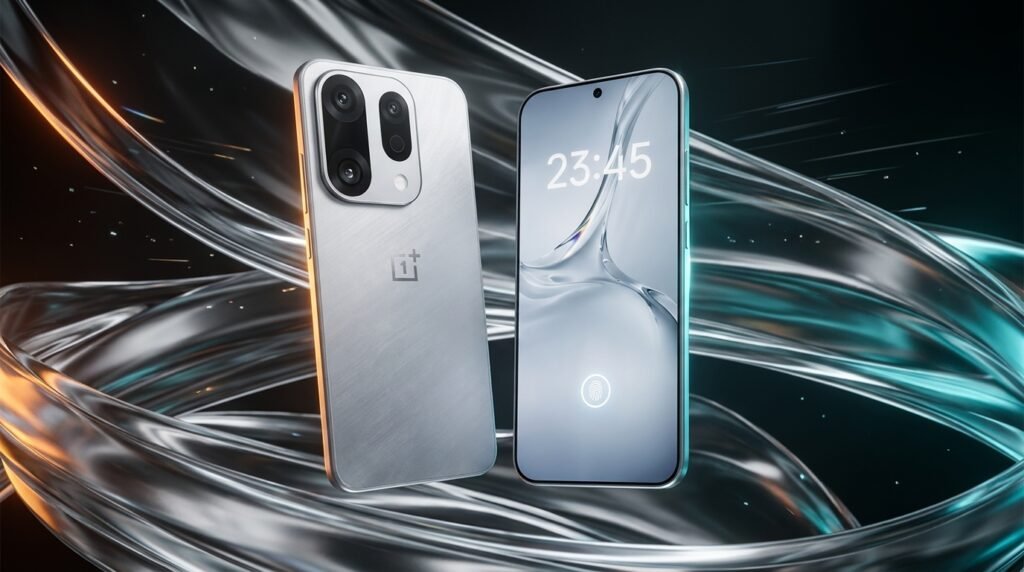
The OnePlus 16 is a gaming beast on paper: a 2nm Snapdragon 8 Elite Extreme Gen 6 chip, a 185Hz screen, and a massive 9,000mAh battery. Most of that hype holds up. But there’s a catch for US readers: OnePlus has launched it in China only, so you can’t walk into Best Buy and pick one up. Here’s what’s real, what’s marketing, and who should actually care.
Quick note before we start: this breakdown is built from OnePlus’s official specs, the launch details, and early benchmark listings. I haven’t tested a retail unit yet, so I won’t pretend I have. When I do, this article gets updated.
Setup: A Phone Built Around One Big Idea
I went into this expecting another “faster chip, same phone” yearly upgrade. That’s not what OnePlus built. The OnePlus 16 launched in China on October 12, 2026, and the whole phone is organized around one idea: don’t let the battery or the heat stop you mid-game.
Here’s the headline package:
- Chip: Snapdragon 8 Elite Extreme Gen 6 (2nm)
- Display: 6.78-inch LTPO OLED, 1272 x 2772, up to 185Hz
- Battery: 9,000mAh with 100W wired and 50W wireless charging
- Cameras: 200MP main, 50MP 3x telephoto, 50MP ultrawide
- Memory: 12GB or 16GB RAM, up to 1TB storage
In China, the base 12GB + 256GB model starts at CNY 5,999, which is about $896. The top 16GB + 1TB version runs CNY 8,499, or roughly $1,270. OnePlus also ran a launch promotion that dropped the base price a little, so you may see slightly lower numbers in some listings.
That $896 figure is interesting. It lands almost exactly on the base Pixel 11’s $899 price, and well under the Pixel 11 Pro’s $1,099. So on raw hardware, the OnePlus is punching way above its price.
First Surprise: The Big Battery Didn’t Make It Heavy
A 9,000mAh battery sounds like it should turn a phone into a brick. I expected a 250-gram monster.
It isn’t. The OnePlus 16 weighs about 217 to 220 grams and is only 8.45 to 8.55mm thick, depending on the color. The OnePlus 15 weighed 211 grams with a 7,300mAh battery. So OnePlus added roughly 23% more battery for about 6 grams.
To The OnePlus 16 carries nearly double that, in a body that doesn’t feel outlandish on paper. The trick is silicon-carbon battery tech, which packs more energy into the same space than older cells.
The screen has a small twist too. The “185Hz” headline isn’t what you get all day. The phone runs at up to 165Hz in everyday use, and the extra 20Hz unlocks only in supported games. That’s still great for gaming, but it’s worth knowing before you picture 185Hz on your home screen.
Test: What the Gaming Numbers Say
Since this is a gaming phone, I focused on three things: raw speed, heat, and screen.
Speed. OnePlus’s own AnTuTu result for the phone comes in around 5.38 million points. Independent listings vary, because AnTuTu versions differ, but they all sit in the same top-tier zone. In aggregated Geekbench 6 and GPU listings, the OnePlus 16 shows about 13% faster single-core and roughly 40% higher GPU compute than the OnePlus 15. That GPU jump is the number gamers should care about most.
Heat. Speed means nothing if the phone throttles after ten minutes. OnePlus uses what it calls the Glacier Cooling System, including a large vapor chamber of roughly 7,930mm² plus graphite layers. On paper, it’s a serious setup. I can’t tell you how it holds up in a 45-minute session yet, and I’d be wary of any review that claims “zero throttling” without showing temperature logs.
Screen. The display can hit 2,000 nits at peak, dim down to 1 nit for dark rooms, and uses 3,840Hz PWM dimming, which helps with eye strain at low brightness. It’s also rated for 100% DCI-P3 color.
|
Spec |
OnePlus 16 |
OnePlus 15 |
| Battery | 9,000mAh | 7,300mAh |
| Wired charging | 100W | 120W |
| Wireless charging | 50W | 50W |
| Max refresh rate | 185Hz (games) | 165Hz |
| Telephoto | 3x | 3.5x |
| Weight | ~217g | ~211g |
Look at that table closely. Two rows quietly went backward.
Doubt: Where the Hype Runs Out
This is where I started second-guessing the “beast” label. Big numbers are easy to print; trade-offs are harder to find.
The price jumped hard. The OnePlus 15 launched in China at CNY 3,999. The OnePlus 16 starts at CNY 5,999. That’s a 50% increase in one generation. A bigger battery and a faster chip are real upgrades, but that’s a lot to ask.
Charging got slower, not faster. The battery is bigger, but wired charging dropped from 120W to 100W. A larger battery plus slower charging means a longer wait for a full top-up.
The zoom got shorter. The telephoto went from 3.5x to 3x. For a 200MP phone, that’s a strange step back for anyone who shoots portraits or distant subjects.
It’s not the sharpest screen out there. At 1272 x 2772, this is a 1.5K display, not QHD+. Gamers won’t mind, since lower resolution helps frame rates and battery life. But if you want the crispest text possible, some rivals do better.
And the big one: it isn’t sold in the US. OnePlus has pulled back from North America and Europe, and there’s no official US or European release planned for the OnePlus 16. That means no US warranty, no carrier support from Verizon, T-Mobile, or AT&T, and no easy returns on Amazon or Best Buy.
Verdict: Who Should Actually Care?
So, gaming beast or overhyped? My honest answer: a beast on specs, overhyped in a few details. The chip, cooling design, and battery are the real deal. The price jump, slower charging, and shorter zoom are where the marketing gets ahead of the reality.
Look at the OnePlus 16 if: you play demanding mobile games for long sessions, battery life is your top priority, and you’re comfortable importing a phone from China. Check that it supports your carrier’s 5G bands before you buy, because China-market phones don’t always cover US bands.
Skip it if: you want a US warranty, easy returns, or reliable carrier support. In that case, a phone you can buy here is the smarter move. If you want a flagship feel at a fair price, our Galaxy S26 FE review is a good place to start, and our Pixel 11 vs Pixel 11 Pro breakdown shows what the extra money buys on Google’s side.
Want to see more from this brand? Browse all our OnePlus phone coverage.
OnePlus 16: Key Specs at a Glance
| Category | Details |
| Launch | October 12, 2026 (China) |
| Display | 6.78-inch LTPO OLED, 1272 x 2772, 1–165Hz adaptive, up to 185Hz in games |
| Peak brightness | 2,000 nits |
| Chip | Snapdragon 8 Elite Extreme Gen 6 (2nm) |
| RAM / Storage | 12GB or 16GB / 256GB to 1TB |
| Rear cameras | 200MP main + 50MP 3x telephoto + 50MP ultrawide |
| Front camera | 50MP |
| Battery | 9,000mAh silicon-carbon |
| Charging | 100W wired, 50W wireless |
| Durability | IP66 / IP68 / IP69 / IP69K |
| Size and weight | ~161.4 x 76.7 x 8.5mm, ~217–220g |
| Colors | Starlight, Dark Forest, Martian Masterpiece |
| China price | From CNY 5,999 (about $896) |
| US availability | Not officially sold |
FAQ
Is the OnePlus 16 available in the US? No. OnePlus has launched it in China only, and there’s no official US or European release planned. Some third-party importers may sell the China model.
How much does the OnePlus 16 cost? In China, it starts at CNY 5,999 (about $896) for 12GB + 256GB. The top 16GB + 1TB model is CNY 8,499 (about $1,270).
Is the OnePlus 16 good for gaming? On paper, yes. It has a 2nm flagship chip, a large vapor chamber cooling system, a 185Hz game mode, and a 9,000mAh battery. Real-world heat and throttling results are still the key thing to watch.
How big is the OnePlus 16 battery? It’s a 9,000mAh silicon-carbon battery with 100W wired and 50W wireless charging, up from 7,300mAh on the OnePlus 15.
Is the OnePlus 16 better than the OnePlus 15? For gaming and battery life, yes. But it costs far more in China, charges slower on wire, and has a shorter telephoto zoom.
