
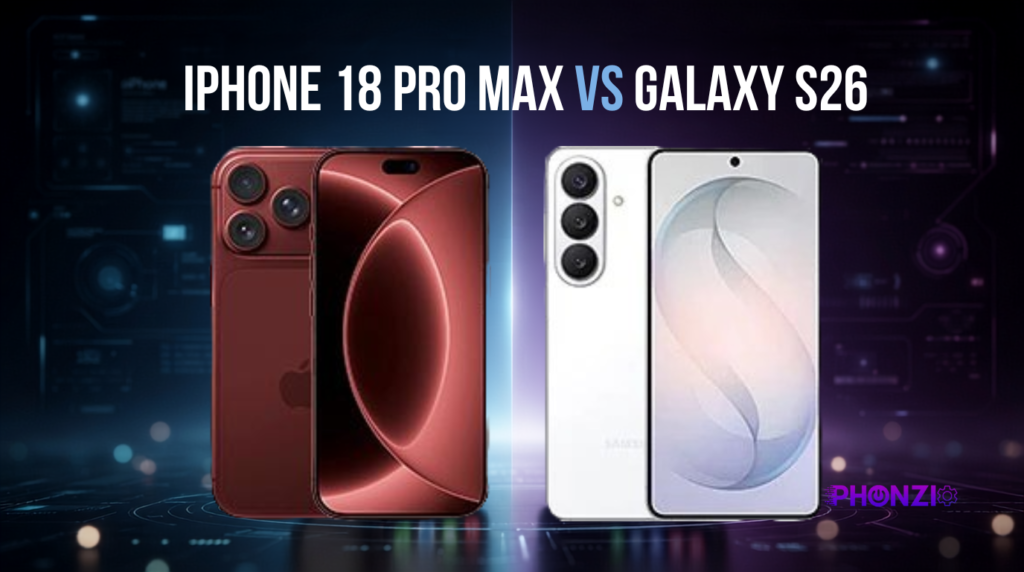
Introduction
The iPhone 18 Pro Max has already become one of the most talked-about upcoming smartphones, and a reported leak involving Tata Electronics, one of Apple’s major manufacturing partners in India, has added even more fuel to the speculation. Tata Electronics was reportedly targeted in a ransomware attack, with internal company files later surfacing online. Among the material being examined in the leaked data, a diagnostics log has reportedly drawn attention for information linked to Apple’s upcoming iPhone models. While leaked information should always be treated with some caution, the reports have added fresh interest to what Apple could be preparing for its next-generation Pro lineup.
That makes the iPhone 18 Pro Max particularly interesting. Apple’s largest upcoming Pro model is expected to bring a combination of a new-generation Apple chipset, a high-end LTPO OLED display, an upgraded camera system, larger battery capacity, and advanced connectivity features. The specifications currently associated with the phone suggest that Apple is targeting users who want maximum performance, photography capabilities, and premium features in one device.
But Apple will not be competing in a vacuum. On the other side is the Samsung Galaxy S26, Samsung’s latest flagship smartphone designed to compete at the very top of the Android market. It combines a 6.3-inch LTPO AMOLED display, flagship-level processing, a triple-camera setup, 12GB of RAM, a 4,300mAh battery, fast connectivity, and Samsung’s latest One UI experience.
This is what makes the iPhone 18 Pro Max vs. Galaxy S26 comparison so interesting. The two phones take very different approaches to flagship smartphones. Apple focuses on its tightly integrated hardware-and-software ecosystem, while Samsung combines Android flexibility with powerful hardware, customization, and Galaxy AI features.
So, which flagship has the stronger overall package? Before comparing their cameras, performance, displays, batteries, and software experiences in detail, let’s look at how the two phones compare on paper.
iPhone 18 Pro Max vs. Galaxy S26: Quick Comparison
Before getting into the individual features, it helps to see how the iPhone 18 Pro Max and Samsung Galaxy S26 compare at a glance. Both are premium flagship smartphones, but their specifications show some clear differences in display size, cameras, battery capacity, storage, and platform.
| Feature | iPhone 18 Pro Max | Samsung Galaxy S26 |
| Display | 6.9-inch LTPO Super Retina XDR OLED, 120Hz | 6.3-inch Dynamic LTPO AMOLED 2X, 120Hz |
| Resolution | 1320 × 2868 pixels | 1080 × 2340 pixels |
| Protection | Ceramic Shield 2, anti-reflective coating | Gorilla Glass Victus 2 |
| Chipset | Apple A20 Pro (2nm) | Snapdragon 8 Elite Gen 5 / Exynos 2600 |
| RAM | 12GB | 12GB |
| Storage | 256GB, 512GB, 1TB, 2TB | 256GB, 512GB |
| Main Camera | 48MP | 50MP |
| Telephoto | 48MP periscope, 4x optical zoom | 10MP telephoto, 3x optical zoom |
| Ultra-wide | 48MP | 12MP |
| Selfie Camera | 18MP | 12MP |
| Video | Up to 4K at 120fps, ProRes RAW, Apple Log 2 | Up to 8K video |
| Battery | 5,391mAh / 5,567mAh, market dependent | 4,300mAh |
| Charging | Up to 50% in 20 min wired; MagSafe/Qi2 wireless | Fast wired and wireless charging |
| Operating System | iOS 27 | Android 16 with One UI 8.5 |
| Wi-Fi | Wi-Fi 7 | Wi-Fi 7 |
| Bluetooth | Bluetooth 6.0 | Bluetooth 5.4 |
| Water Resistance | IP68 | IP68 |
| USB | USB-C 3.2 Gen 2, DisplayPort | USB-C 3.2 |
| Biometrics | Face ID | In-display fingerprint sensor |
| Weight | 240g | 167 g |
On paper, the iPhone 18 Pro Max stands out with its larger 6.9-inch display, up to 2TB of storage, higher-resolution telephoto and ultra-wide cameras, and a substantially larger battery capacity on the listed configurations. Its camera system also puts a strong emphasis on professional video features such as ProRes RAW and Apple Log 2.
The Galaxy S26, meanwhile, offers a more compact 6.3-inch form factor while still delivering a 120Hz LTPO AMOLED display, 12GB of RAM, a 50MP main camera, a dedicated telephoto lens, and Samsung’s Android-based software experience.
The numbers only tell part of the story, however. The real differences become clearer when we look at how each phone handles its display, performance, cameras, battery, and software.
iPhone 18 Pro Max: Specifications and Features
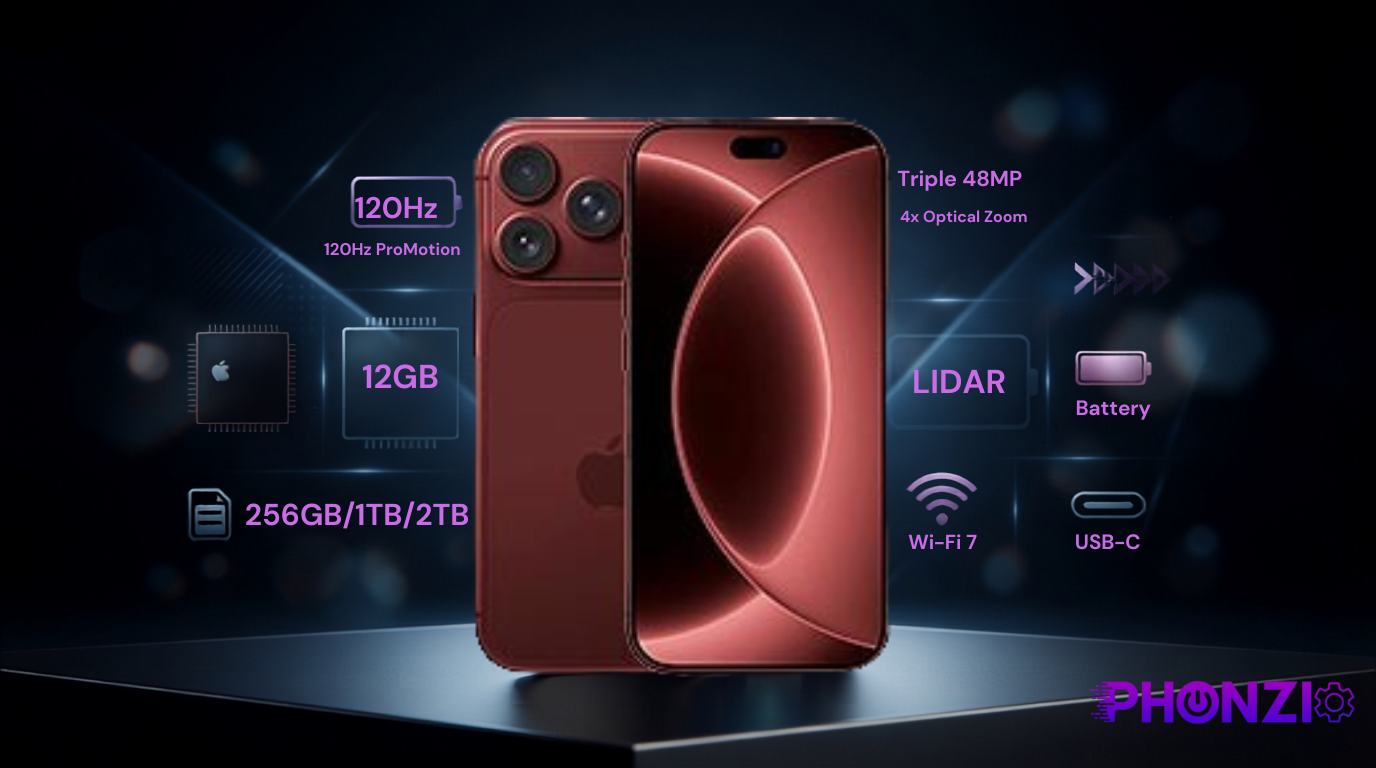
The iPhone 18 Pro Max is positioned as Apple’s top-tier flagship, combining a large display, a new-generation processor, a versatile triple-camera system, and a high-capacity battery. Its specifications suggest that Apple is focusing heavily on performance, photography, professional video, and premium connectivity.
Display
The iPhone 18 Pro Max features a 6.9-inch LTPO Super Retina XDR OLED display with a 120Hz refresh rate. It supports HDR10 and Dolby Vision, making it well suited for high-quality video streaming, gaming, and other visually demanding content.
The display has a 1320 × 2868-pixel resolution, delivering around 460 pixels per inch. Apple is also expected to use Ceramic Shield 2 for protection, along with an anti-reflective coating designed to improve visibility in different lighting conditions.
Design and Build
The phone is listed at 9.0mm thick and weighs 240 grams, making it a substantial flagship. Its construction combines a glass front protected by Ceramic Shield 2 with an aluminum frame and aluminum or glass rear construction.
The iPhone 18 Pro Max also carries an IP68 rating, meaning it is dust-tight and designed to withstand immersion in water up to 6 meters for up to 30 minutes under the listed conditions.
Apple is expected to offer the phone in Coffee Brown, Purple, and Burgundy, giving the Pro Max a distinctive selection of finishes.
Performance and Memory
At the heart of the iPhone 18 Pro Max is the Apple A20 Pro, listed as a 2nm chipset with a hexa-core CPU and an 8-core Apple GPU. This new-generation silicon is expected to provide the processing power needed for demanding apps, gaming, photography, video editing, and AI-related workloads.
The phone is listed with 12GB of RAM and storage options ranging from 256GB to 2TB. That gives buyers four storage choices: 256GB, 512GB, 1TB, and 2TB.
Camera System
The rear camera setup consists of three 48MP cameras. The primary camera uses a 48MP wide sensor with a variable f/1.6–4.0 aperture, dual-pixel PDAF, and sensor-shift optical image stabilization.
The second camera is a 48MP periscope telephoto with a 100mm focal length and 4x optical zoom. It also includes PDAF and 3D sensor-shift OIS.
The third is a 48MP ultra-wide camera with a 120-degree field of view. A TOF 3D LiDAR scanner is also included for depth-related functions.
For video, the iPhone 18 Pro Max supports recording at up to 4K 120fps, along with 10-bit HDR, Dolby Vision HDR, ProRes, ProRes RAW, Apple Log 2, and spatial video and audio recording. These features make the phone particularly interesting for users who want advanced video controls rather than simply point-and-shoot recording.
Selfie Camera
On the front, the phone features an 18MP multi-aspect ultra-wide selfie camera with PDAF. It is paired with an SL 3D depth and biometric sensor for Face ID.
The front camera also supports HDR, Dolby Vision HDR, spatial audio recording, and ProRes RAW-related capabilities listed for the device.
Battery and Charging
Battery capacity varies by market, with listed capacities of 5,391 mAh for the Nano-SIM model and 5,567 mAh for the eSIM-only model.
For charging, the phone supports wired charging with 50% charge in around 20 minutes under the listed conditions. It also supports MagSafe and Qi2 wireless charging at up to 25W, while reverse wired charging is rated at 4.5W.
Connectivity and Other Features
The iPhone 18 Pro Max supports Wi-Fi 7, Bluetooth 6.0, NFC, GPS, and USB-C 3.2 Gen 2 with DisplayPort. It also includes Ultra Wideband technology and satellite-based Emergency SOS, Messages, and Find My features.
With Face ID, stereo speakers, IP68 protection, and a wide range of connectivity options, the iPhone 18 Pro Max is clearly designed as an all-in-one premium flagship rather than simply a performance-focused smartphone.
Samsung Galaxy S26: Specifications and Features
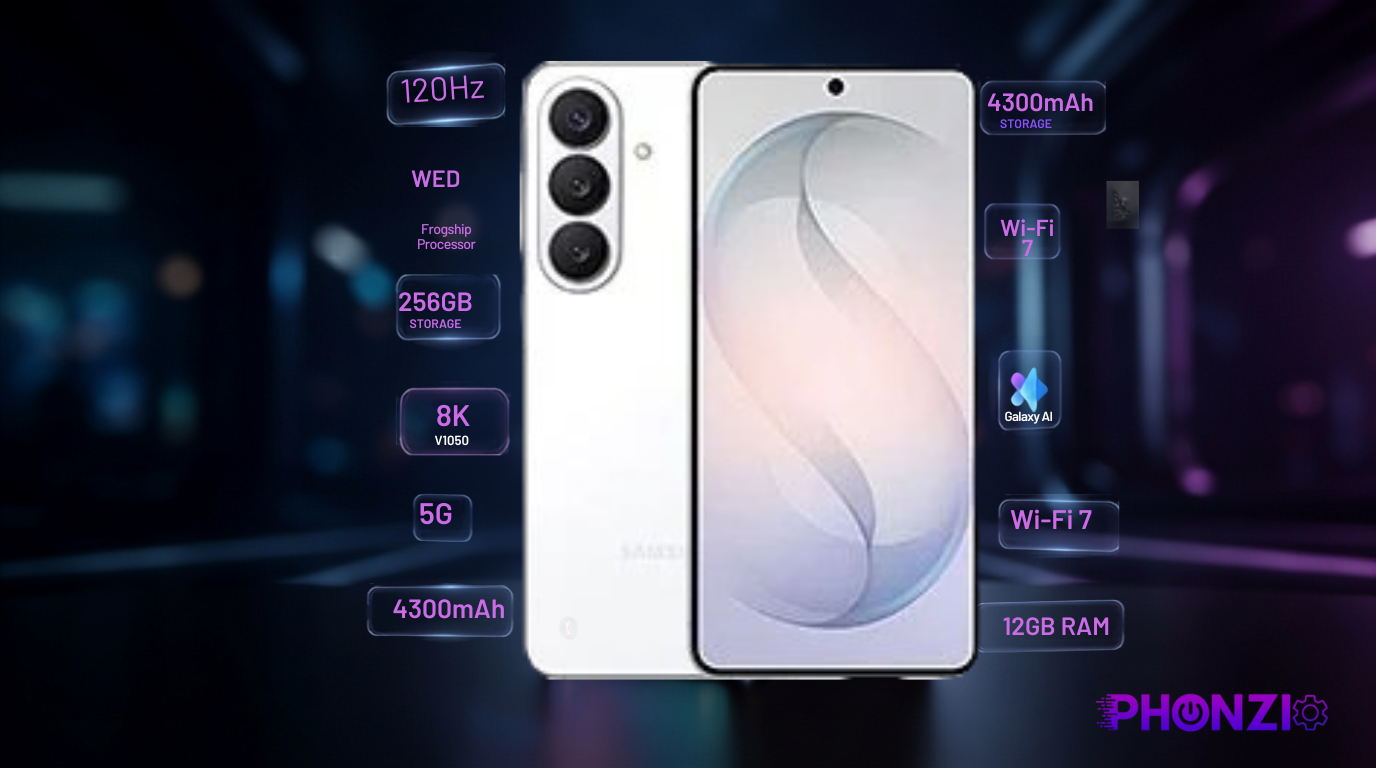
The Samsung Galaxy S26 takes a different approach to the flagship market. Instead of going for the larger size of the iPhone 18 Pro Max, Samsung uses a more compact 6.3-inch design while still packing flagship-level hardware, a high-refresh-rate AMOLED display, a triple-camera system, and the latest Galaxy software experience.
Display
The Galaxy S26 features a 6.3-inch Dynamic LTPO AMOLED 2X display with a 120Hz refresh rate. It also supports HDR10+ and can reach up to 2,600 nits of peak brightness, making the screen suitable for outdoor use as well as watching HDR content.
The LTPO technology allows the display to adjust its refresh rate according to what is happening on the screen. This can help balance smooth animations with power efficiency.
Compared with the iPhone 18 Pro Max’s 6.9-inch panel, the Galaxy S26 is noticeably smaller. That makes it potentially easier to handle with one hand while still providing the smoothness expected from a modern flagship.
Design and Build
Samsung keeps the Galaxy S26 relatively compact while giving it a premium flagship construction. The phone uses an Armor Aluminum 2 frame and carries an IP68 rating for dust and water resistance.
Its smaller body also makes the Galaxy S26 a different proposition from the much larger iPhone 18 Pro Max. Buyers who prefer a phone that is easier to carry and handle may find Samsung’s approach more practical.
Performance and Memory
The Galaxy S26 is powered by either the Snapdragon 8 Elite Gen 5 or Exynos 2600, depending on the market. This gives Samsung’s flagship access to a current-generation high-performance platform designed for demanding apps, gaming, multitasking, and AI workloads.
The phone comes with 12GB of RAM and offers 256GB or 512GB of internal storage. There is no microSD card slot, so buyers need to choose their preferred storage capacity when purchasing the device.
Compared with the iPhone 18 Pro Max, Samsung offers fewer storage options, but 256GB and 512GB should still provide enough space for most users.
Camera System
The Galaxy S26 features a triple-camera setup consisting of a 50MP main camera, 10MP telephoto camera, and 12MP ultra-wide camera.
The 50MP main sensor is designed to handle everyday photography, while the dedicated 10MP telephoto camera provides 3x optical zoom. The 12MP ultra-wide camera gives users a wider perspective for landscapes, group photos, and architectural shots.
The camera system also supports up to 8K video recording, giving the Galaxy S26 an advantage for users who specifically want high-resolution video capture.
While the iPhone 18 Pro Max uses three 48MP rear cameras and offers advanced professional video formats, Samsung takes a more traditional flagship approach with a higher-resolution primary sensor and a dedicated optical zoom camera.
Battery and Charging
The Galaxy S26 packs a 4,300mAh battery. Its smaller display compared with the iPhone 18 Pro Max means the phone does not need to power as large a panel, which can help with overall efficiency.
Samsung also supports both wired and wireless charging, giving users flexibility when charging the phone at home, at work, or with compatible accessories.
The iPhone 18 Pro Max has a considerably larger listed battery capacity, but battery performance cannot be judged by capacity alone. Chip efficiency, display behavior, software optimization, and everyday usage all play an important role.
Software and AI
The Galaxy S26 runs Android 16 with One UI 8.5, giving users Samsung’s familiar interface along with Android’s customization options.
Samsung’s software experience also puts a strong focus on Galaxy AI, bringing intelligent features into areas such as productivity, communication, photography, and everyday device use.
This gives the Galaxy S26 an important advantage for users who prefer customization and a more flexible Android experience, while the iPhone 18 Pro Max takes Apple’s more tightly integrated iOS approach.
Connectivity and Other Features
The Galaxy S26 supports 5G, Wi-Fi 7, Bluetooth 5.4, NFC, and USB-C 3.2. It also includes flagship features such as an in-display fingerprint sensor, giving users an alternative biometric method to Apple’s Face ID.
Overall, the Galaxy S26 is designed to deliver flagship performance in a more compact package. Its combination of a 120Hz AMOLED display, 12GB RAM, versatile triple-camera setup, 4,300mAh battery, and Samsung’s latest software makes it a strong competitor to Apple’s much larger iPhone 18 Pro Max.
Connectivity and Extra Features
Both the iPhone 18 Pro Max and Galaxy S26 are built as modern flagship smartphones, so connectivity is strong on both sides. However, each device brings a slightly different set of features to the table.
The iPhone 18 Pro Max supports Wi-Fi 7, Bluetooth 6.0, NFC, GPS, GLONASS, Galileo, BDS, QZSS, and NavIC. It also includes USB-C 3.2 Gen 2 with DisplayPort, giving users a high-speed wired connection for data transfer and external-display support.
Apple also includes Ultra Wideband technology, which can improve device-to-device awareness and location-based features within the Apple ecosystem. The phone supports Emergency SOS, Messages, and Find My via satellite, adding useful connectivity options when traditional cellular networks are unavailable.
The Galaxy S26 supports 5G, Wi-Fi 7, Bluetooth 5.4, NFC, and USB-C 3.2. This gives Samsung’s flagship the essential connectivity expected from a premium Android phone, including fast wireless networking and modern wired connectivity.
Biometrics and Security
The two phones also differ in how they handle biometric authentication.
The iPhone 18 Pro Max uses Face ID, supported by its SL 3D depth and biometric sensor system. This provides facial authentication for unlocking the phone and other supported functions.
The Galaxy S26 uses an in-display fingerprint sensor, giving users a different method of secure authentication. Some users may prefer fingerprint unlocking because it can be convenient in situations where facial recognition is less practical.
Which Offers More?
The iPhone 18 Pro Max has an impressive connectivity package, particularly with Bluetooth 6.0, satellite communication features, Ultra Wideband, and DisplayPort support over USB-C.
The Galaxy S26 covers the core flagship connectivity requirements while pairing them with Samsung’s Android ecosystem and fingerprint authentication.
Neither phone is lacking in everyday connectivity. The difference is that Apple adds several ecosystem-focused features, while Samsung keeps the Galaxy S26 centered around a flexible Android experience and familiar flagship hardware.
Final Verdict: iPhone 18 Pro Max vs. Galaxy S26
The iPhone 18 Pro Max vs. Galaxy S26 battle is not simply about which phone has the biggest numbers. Both flagships take different approaches to delivering a premium smartphone experience, and the better choice ultimately depends on what you value most.
The iPhone 18 Pro Max has several clear advantages on paper. Its 6.9-inch LTPO Super Retina XDR OLED display is larger, its storage options extend all the way to 2TB, and its triple-camera system includes three 48MP sensors with a 4x optical periscope telephoto camera. Apple’s professional video features, including ProRes RAW and Apple Log 2, also make it particularly interesting for creators.
Its listed battery capacity is another major advantage, while features such as Wi-Fi 7, Bluetooth 6.0, satellite connectivity, Face ID, and Ultra Wideband add to its premium feature set.
The Galaxy S26, however, has its own strengths. Its 6.3-inch size makes it considerably more compact, while the 120Hz Dynamic LTPO AMOLED 2X display provides a smooth flagship experience. Samsung also offers 12GB of RAM, a 50MP main camera, a dedicated 3x telephoto camera, 8K video recording, Android 16, and One UI 8.5.
For users who prefer iOS, Apple’s ecosystem, professional video tools, large storage options, and a bigger display, the iPhone 18 Pro Max is the more compelling choice.
For those who prefer Android, customization, Samsung’s Galaxy AI features, a compact flagship design, and an in-display fingerprint sensor, the Galaxy S26 is likely to be the better fit.
