
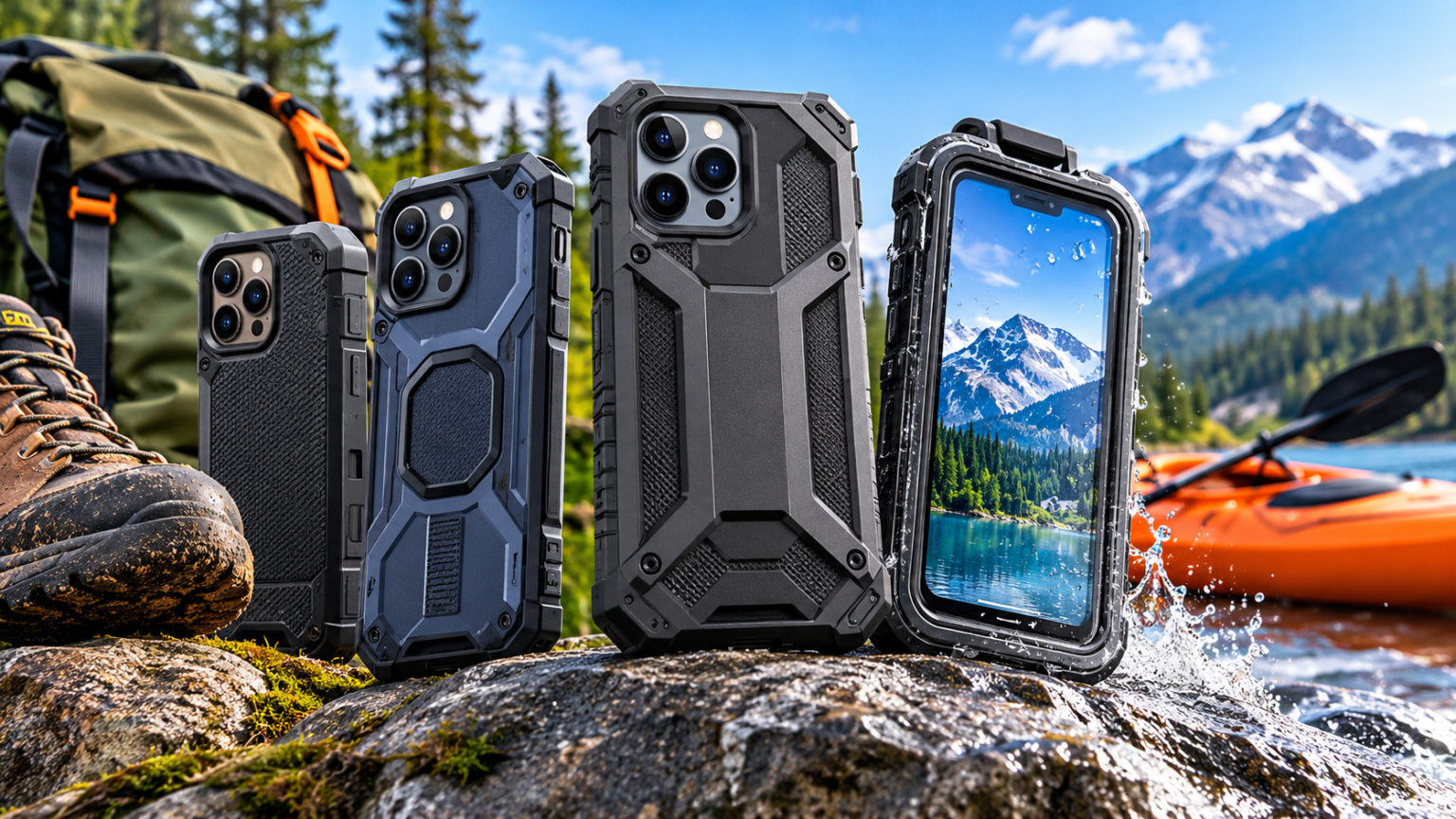

Phones aren’t built for the trail. Mud, sand, rain, rocks, and the occasional slip off a kayak seat are all things a bare glass slab handles badly. A good rugged case is cheap insurance against a $1,000 mistake.
Below I break down what “rugged” means, which cases are worth a look, and how to match one to what you actually do outside. One caveat: I couldn’t find independent 2026 lab tests for every current phone, so check the fit and specs for your exact model before you buy.
Quick Picks at a Glance
| Case | Best for | Waterproof? | Rough price |
|---|---|---|---|
| OtterBox Defender Pro | Overall toughness | No | $70–$90 |
| UAG Monarch (Kevlar Pro) | Strong protection with a slimmer feel | No | Varies by model |
| Pelican Voyager | Heavy drops, lifetime guarantee | No | $50–$60 |
| Catalyst Waterproof | Swimming, kayaking, boating | Yes | around $70 (older listing) |
| LifeProof Frē | Wet jobs and water play | Yes | Varies by model |
| SUPCASE Unicorn Beetle Pro | Budget protection | No | Usually under $50 |
| Spigen Slim Armor | Slim everyday carry | No | Usually under $30 |
Prices move around, so treat these as ballparks.
What Makes a Case “Rugged”? (Without the Jargon)
Drop protection. You’ll see “MIL-STD-810G” or “810H” on a lot of boxes. It’s a US military testing standard, and brands usually test to it themselves. It’s a decent sign, but it isn’t a guarantee. The drop height a brand claims tells you more. For example, Pelican rates its Voyager for drops from 16 feet, while UAG rates the Monarch at 13 feet.
IP ratings. This is the dust and water rating. IP68 means dust-tight and able to survive submersion, but only up to a set depth and time. Most rugged cases that aren’t sealed will shrug off rain and splashes, not a swim. If you’ll be in or on the water, buy a case made to be sealed.
Built-in screen protection. Some cases, like the OtterBox Defender Pro, include a screen protector. Others leave the screen to you. A screen is the most likely thing to crack, so don’t skip this.
The Best Rugged Cases for Outdoor Phone Use
Best overall: OtterBox Defender Pro. It’s the long-standing standard for a reason. It layers an inner shell, an outer rubber slipcover, and a holster with a belt clip that doubles as a kickstand. The tradeoff is bulk, and some reviewers find Defender cases a pain to install and use day to day.
Best for extreme drops and job sites: Pelican Voyager. Pelican backs its cases with a lifetime guarantee, and the drop rating above is the highest in this list. It’s a solid pick if your phone lives on a roof, a truck bed, or a rocky trail.
Best waterproof: Catalyst Waterproof Case. This one seals your phone in tight. GearJunkie described it as waterproof to 16 feet and drop-proof to 6 feet. If you’re paddling, snorkeling, or fishing from a boat, it’s the safer bet. LifeProof Frē is another well-known waterproof option for wet jobs and water play.
Best slim rugged case: UAG Monarch or Spigen Slim Armor. Travel + Leisure named the UAG Monarch Kevlar Pro its best overall protective case after testing 11 of them. If you want less bulk, Spigen Slim Armor earned a nod from Reviewed as the best rugged pick for an earlier iPhone, and it’s neither bulky nor too thin. Spigen makes versions for newer phones too.
Best for hikers and campers. Look for a case with a lanyard hole or one that works with a carabiner clip. Mounting systems matter here too. Rokform, Quad Lock, and Peak Design all make cases built around mounting, which is handy for bikes and packs.
Best budget: SUPCASE Unicorn Beetle Pro. It’s a smart pick if you’re buying for a whole crew on a budget. The build isn’t quite on par with OtterBox or Pelican, but for the price it holds up well.
Best for iPhone, Galaxy, and Pixel. All the brands above sell cases for the big three. The big thing is an exact fit for your model: camera cutouts, button feel, and charging all depend on it. Galaxy S Ultra owners should also confirm the S Pen slot stays usable.
Features That Matter Outdoors
- Grip and texture. Wet, muddy, or cold hands drop things. A textured finish helps.
- Raised edges. A lip around the screen and camera keeps glass off the ground when the phone lands flat.
- Port covers and buttons. Covers keep dust and grit out of the charging port. Check that the buttons still click without a fight.
- Kickstands, mounts, and clips. Handy for hands-free video, navigation, or a quick break.
- Wireless and MagSafe charging. Not every rugged case supports them, and mounting systems and extras are model-specific, so check your exact variant.
Rugged Case vs. Waterproof Case vs. Waterproof Pouch
A rugged case is for drops and rough handling. A waterproof case seals the phone for submersion. A pouch is a cheap, flexible bag, handy for a beach day, but it’s less protective and can make touchscreens and cameras harder to use.
Can you combine them? Yes. Plenty of people keep a rugged case on and add a pouch for the lake. Dunk tests show waterproof claims vary widely, so Consumer Reports tested seven popular waterproof options in a pressure tank. Test any case with water-safe paper towels before trusting it with your phone.
Which Case for Which Activity
- Hiking and trail running: a slim rugged case with a lanyard hole. Weight matters.
- Camping and overlanding: a Pelican- or OtterBox-style case with a built-in stand.
- Fishing and boating: a waterproof case, plus a floating strap.
- Skiing and snow: a case with a bit of grip you can still handle in gloves. Keep the phone in an inner pocket, since cold drains batteries.
- Construction and work sites: for roofing and construction, drop height matters most, so Pelican Voyager or UAG Monarch are good picks.
Don’t Forget the Screen
Even a tough case can leave the glass exposed. Pair it with a tempered glass protector, and check that it fits under the case’s raised edges. If the case already has a built-in screen cover, adding glass usually isn’t needed.
Care Tips
After a muddy or salty day, take the phone out and rinse the case with mild soap and warm water. Let it air dry or dab it dry before putting the phone back in. Replace the case if the corners crack, the rubber stretches loose, or a waterproof seal looks worn.
Common Mistakes to Avoid
- Buying the wrong model fit. Even a near-match can leave the camera exposed.
- Assuming “rugged” means “waterproof.” It usually doesn’t.
- Skipping the screen. A case alone won’t save it.
- Trusting a claim without checking. Look for a stated drop height and independent reviews.
- Ignoring bulk. If you hate carrying it, you’ll leave it off.
FAQs
Do rugged cases make phones overheat? Thick cases can trap some heat, especially in direct sun or during heavy use like gaming or navigation. Take the phone out of the case if it gets hot.
Will a rugged case block signal or GPS? Generally no. Plain plastic and rubber don’t interfere. Metal-heavy designs can, so check reviews for those.
Do waterproof cases work with touchscreens and cameras? Mostly, but expect slightly muffled calls and a bit less touch sensitivity through the cover. Wipe the lens clean for better photos.
Are rugged cases worth it for a budget phone? Yes, especially for a phone you can’t afford to replace. A $30–$50 case beats a $200 repair.
Final Verdict
If you want one case for most outdoor use, grab an OtterBox Defender Pro or UAG Monarch. Need maximum drop protection? Go Pelican Voyager. Spending time in or on the water? Get a sealed waterproof case like the Catalyst. On a budget, SUPCASE Unicorn Beetle Pro is the one to beat. Whatever you pick, match it to your exact phone and add a screen protector.
